by Majka Baur
Bare Bones: What Is a Rite of Passage?
What is a rite of passage?
Life transitions don’t need to be lonely, traumatic, or dangerous. By their very nature, they are messy, full of highs and lows, often leading us into unknown territory.
And yet, when these transitions are consciously held – especially through rites of passage – they can become powerful catalysts: not only for individual growth, but also for the development of cultures rooted in purpose, responsibility, and care for the Earth.
A rite of passage is a process or ritual that marks the transition from one stage of life to another. A rite of passage is not something we go through alone: it is a relational process that includes different roles and perspectives.
Three essential roles are involved:
- Participants: those moving through a life transition and undergoing the rite
- Guides: those who hold and support the process, often drawing from lived experience and training
- Witnesses: members of the human and more-than-human community who acknowledge and receive the transformation
Witnesses play a vital role. They help to mark what is ending, recognise what is emerging, and welcome the person into their new phase of life.
The three phases of a rite of passage
Across cultures and traditions, rites of passage tend to follow three essential phases. While the form varies, the underlying structure remains remarkably consistent.
This model was first described by anthropologist Arnold van Gennep and later expanded by others. If you want to explore the background, you can read more here Wikipedia: Rite of Passage.
1. Preparation
This phase is about becoming conscious. It invites us to look back and acknowledge where we come from, to honour the past, and to make space for what has not yet been integrated.
Preparation also includes learning the skills needed to navigate the transition. These can be emotional, relational, or practical. It creates the foundation and orientation for what is to come.
2. Liminal space
The liminal phase is the threshold – the in-between space where something is ending, but the new has not yet fully emerged.
Here, the person steps out of their familiar environment and enters unknown territory. Often, this includes out of the ordinary experiences such as solitude in nature, silence, fasting, or physical challenge.
In this space, familiar structures begin to dissolve. The identity we have known softens, and something deeper can reorganise. This process cannot be controlled – it can only be entered and experienced.
What happens here often leaves a lasting imprint. There is a clear before, and a clear after.
3. Integration
In the final phase, the person returns to their community. They are seen and acknowledged in who they have become, and the transition is marked and celebrated.
From here, the new phase of life begins to take form in everyday reality. This can show up through new ways of being, new responsibilities, or a shift in how one relates to the world.
Traditionally, this might have meant a boy becoming a hunter, a girl becoming a woman, or a widow re-entering social life after a period of mourning.
Today, rites of passage can mark many different life transitions. They may accompany the move from studies into work, a career change, becoming a parent, grieving a loss, or stepping into elderhood.
The outer forms have changed. The inner movement remains.
What makes a rite of passage transformative?
Not every intense or meaningful experience is a rite of passage. Certain elements give these processes their depth and transformative power.
Out of the ordinary experiences
The liminal phase often includes experiences that deliberately intensify perception and awareness. These can include solitude, time in nature, fasting, physical endurance, sleep deprivation, movement, chanting, or other ritual practices.
The purpose is not intensity for its own sake. It is to bring a person into a state that is physically, emotionally, and psychologically out of the ordinary.
In this state, familiar patterns can loosen, dissolve, and reorganise. The usual sense of self may soften or temporarily fall apart, allowing something new to emerge.
From this process, a more integrated sense of self, or Ego, can take shape. One that is less defined by past conditioning and more aligned with what is true in the present.
Storytelling and being witnessed
Storytelling is central, especially during preparation and integration. While sitting in a circle, called Council, people speak one at a time while others listen without interruption or judgement (Explore more about The Way of Council on the European Council Network site).
Being witnessed in this way is powerful. It allows us to experience that we are not broken – and do not need fixing. It reminds us that we belong, exactly as we are.
At the same time, we begin to recognise that our personal story is part of a larger human experience. We are both unique and deeply connected.
Guidance and support
Rites of passage are held by guides who support the process. Their role is not to lead the experience for the participant, but to create a structure in which transformation can unfold.
They offer perspective, practices, and reflections drawn from experience. At the same time, a well-held rite of passage honours the autonomy of the individual and invites them to shape the process in a way that is meaningful for them.
Guides help to create a field of safety – both practical and psychological. They accompany participants as they move beyond what is known, while remaining present and attentive.
Ceremony
Ceremony gives visible form to inner transformation. Through symbolic action, something internal becomes tangible and can be consciously marked.
This can take many forms. A person might build a symbolic threshold on the land and consciously step across it to mark the transition from one life phase into another. Someone might sit in a “death lodge” and say goodbye to parts of their life that are ending. Another might bind themselves to a tree and, at a chosen moment, cut the cord as a symbol of releasing an old pattern.
Even simple gestures can carry meaning. Lighting a candle at the beginning of a council, or ringing a bell before meditation, can signal a shift from everyday life into a different kind of space.
What matters is not the form itself, but the intention and presence brought to it. Ceremony becomes powerful when it reflects something that is real for the person.
Not every retreat is a rite of passage
Today, there are many ways to step out of everyday life and enter intense or transformative experiences. Long-distance hikes, marathons, 10-day Vipassana retreats, ayahuasca ceremonies, sweat lodges, silence retreats, or other immersive formats can all bring us into altered states of awareness.
Some of these experiences can become rites of passage – depending on how they are held. When they include conscious preparation, a clear liminal space, and supported integration, they can mark a true transition.
Without this structure, however, even powerful experiences can remain incomplete. They may open something, but not fully support its integration into everyday life.
This can sometimes lead to a sense of disconnection or a longing to return to peak experiences again and again. The deeper transition – the recognition that something has ended and something new has begun – remains unmarked.
A rite of passage, by contrast, includes this conscious recognition. It gives form and meaning to change.
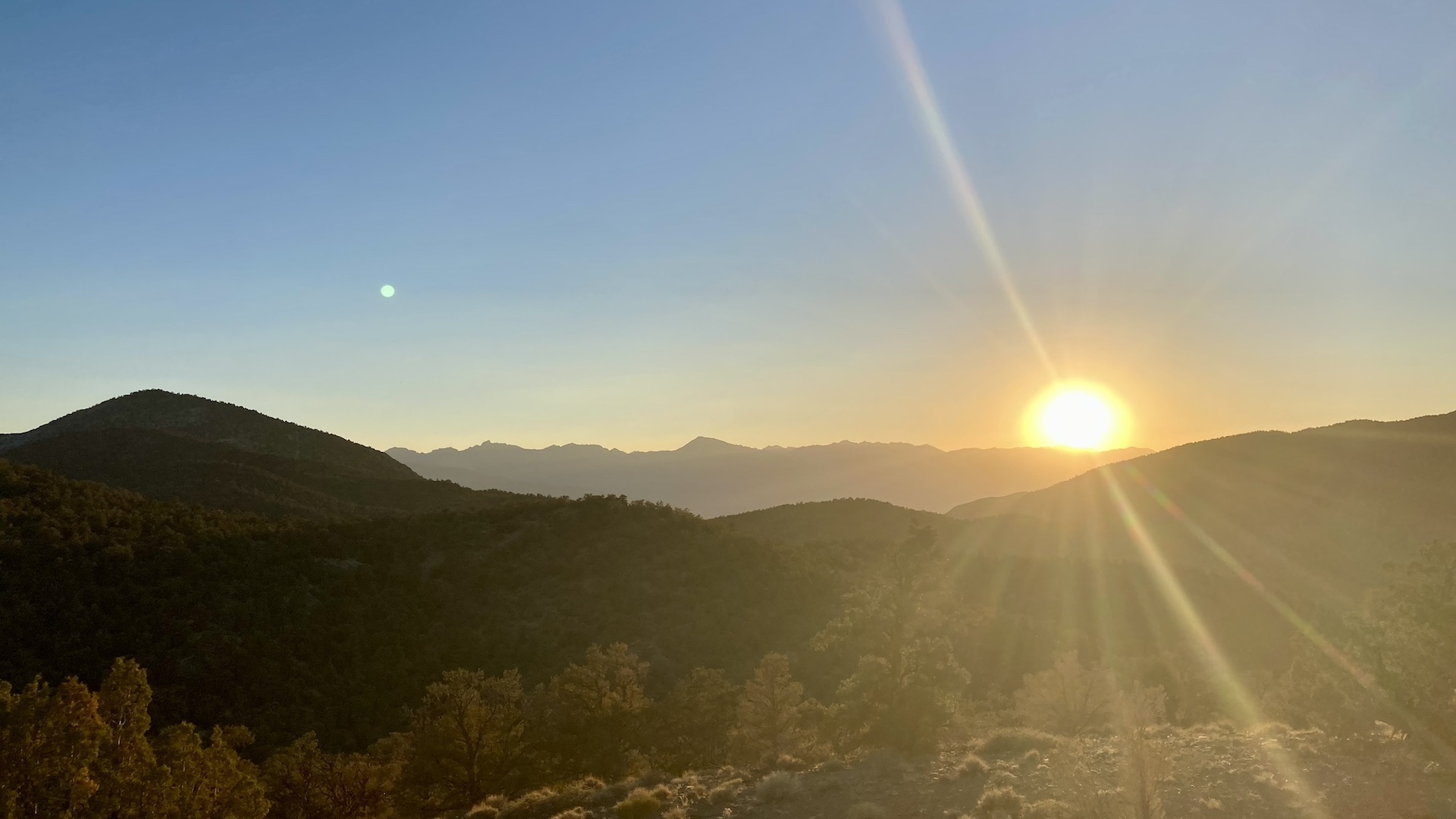
Wilderness rites of passage and the vision quest
Wilderness-based rites of passage, such as a vision quest, offer a unique and powerful context for life transitions. They often include several days of solitude in nature, sometimes combined with fasting and silence.
In this setting, nature itself becomes the container for the process. The land, the forest, and the elements hold the space in a way that is both grounding and expansive.
Each person finds their own place and their own way of being in it. What supports one person may be different for another, and there is no single right way to experience this time.
Again and again, something essential emerges. A sense of connection, to the land, to life, and to oneself.
Spending extended time alone in nature, without distraction, can awaken a deep sense of belonging. Not as an idea, but as a lived experience.
You begin to feel that you are not separate from the world around you, but part of it. This is one of the core gifts of a vision quest.
Why rites of passage matter for cultural transformation
For a long time, I believed that ceremonies were empty traditions. Something people did because it was expected, rather than something meaningful.
Through my own experiences with rites of passage and vision quests, this perspective changed. I began to see that we are the ones who give meaning to the transitions in our lives.
Rites of passage offer a way to consciously engage with life transitions. They allow us to mark them, to honour them, and to be witnessed in them.
They are not about following tradition for its own sake. They are about creating meaning that is true for us, in relationship with others.
In this sense, rites of passage can be seen as acupuncture points within a culture. Small, intentional acts at key moments of transition can influence the whole system.
They shape how we understand growth, grief, belonging, and responsibility. They show what it means to change, and to be supported in that change.
Life transitions will happen, whether we engage with them consciously or not. The question is how we choose to meet them.
When we bring awareness, ceremony, and community into these moments, we do not only transform our own lives. We also contribute to the culture we are part of.
Self-reflection
You may want to pause and reflect on your own life transitions:
- What is ending in my life right now? And what is beginning to emerge?
- Am I moving through a life transition?
- Which transitions in my past were never consciously marked or witnessed?
- What might want to be acknowledged, grieved, or celebrated?
- Who could hold space for me?
Taking time with these questions can already be a first step.
A first step towards meeting life transitions not as something to endure alone – but as something that can be held, witnessed, and honoured.
An Invitation to Get in Touch
Did this article stir something in you? Are you in a life transition and thinking about how to honour and make sense of it?
Don’t hesitate to get in touch by using the contact form. You are also welcome to check out the Vision Quests I’m offering.
What Came Before
In my past article “Why Rites of Passage Matter: The Missing Link in Cultural Development“, we explored what happens when life transitions are not accompanied in a supportive way and the consequences this can have on an individual and collective level.
Credits: Photos by Majka Baur-Sprenger